Whole House Wellness Offices
Client work · Brand identity · Logo, color, typography, environmental applications
Summary
Kala set out to create a coworking space built specifically for therapists, counselors, and wellness professionals: a place that supports the people who spend their days supporting others. I helped her build a calm, credible identity for this sister brand to Fire House Workspace, one that feels connected to the parent brand while signaling a completely different experience.
Their goal
Kala's practitioners are building or growing private practices while carrying the emotional weight of deeply personal work. They don't just need a desk. They need a place that gives them peace of mind, keeps a clear boundary between their personal and professional lives, and feels private, credible, and safe for them and for their clients. Many clients arrive in vulnerable moments, so the space has to start building trust before the first conversation ever happens.
Their challenge
Whole House had to live alongside Fire House Workspace without feeling like a duplicate. Fire House is built for momentum. Whole House needed to be built for restoration. The brand couldn't rely on trendy, high-energy visuals, and it couldn't feel clinical or sterile either. It had to feel calm and composed while staying warm and human.
How we got there
Kala provided detailed client avatars early on, which kept every decision grounded in the real people using the space. I studied the parent brand's DNA, including its use of Ochre and Green Gray as signals of a premium professional environment, and then shifted that energy toward rest and clarity.
Two directions: I developed two concepts from the same strategy. One centered on openness and clarity, a lighter, more expansive look that creates mental breathing room. The other centered on containment and grounding, using depth, warmth, and enclosure to create a feeling of safety.
The decision: Kala and I reviewed both together and aligned on lightness and clarity, with enough structure to build trust and credibility.
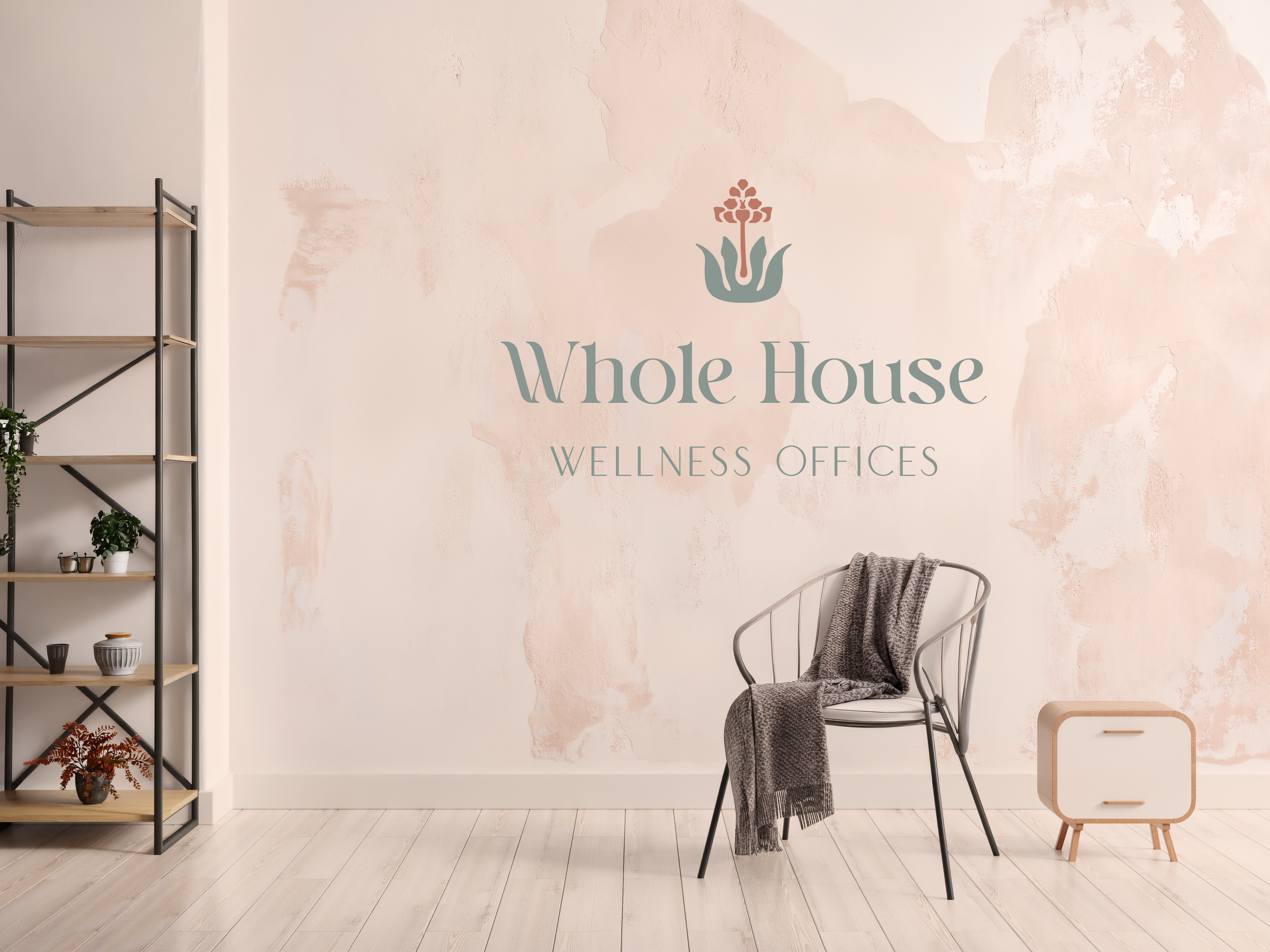
The mark: A minimal botanical form inspired by the yucca flower, New Mexico's state flower. It represents grounded growth and stays subtle rather than decorative.
Type: Kilgis and Boowie. Boowie carries over from Fire House Workspace, tying the two brands together and keeping them consistent as they grow. Kilgis adds a softer touch that reflects the caring nature of the professionals who work in the space.
Color: The palette comes from Fire House Workspace's colors, desaturated and grounded for a more holistic, nurturing feel. The two brands stay visibly related, but Whole House trades Fire House's momentum for a sense of calm.
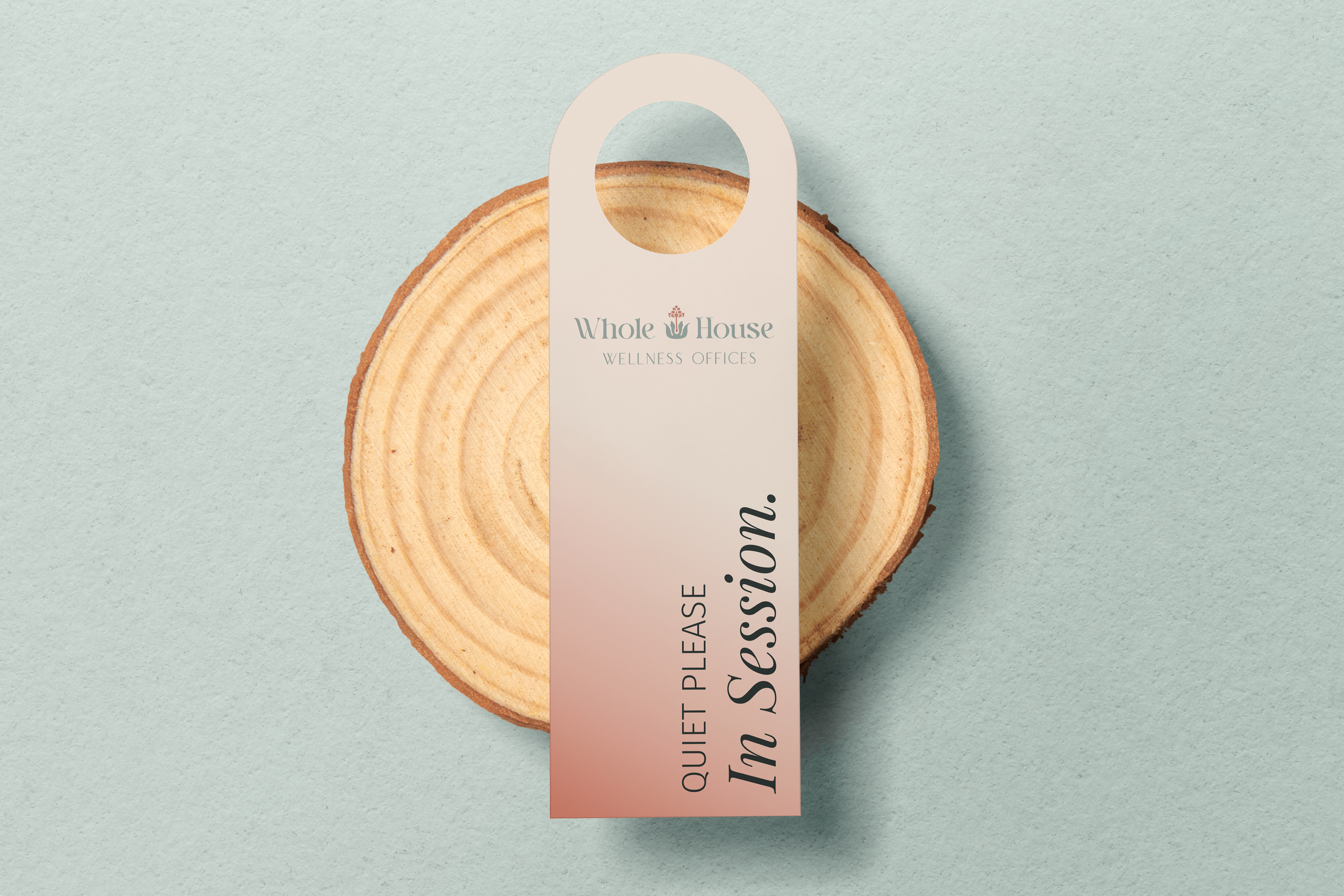
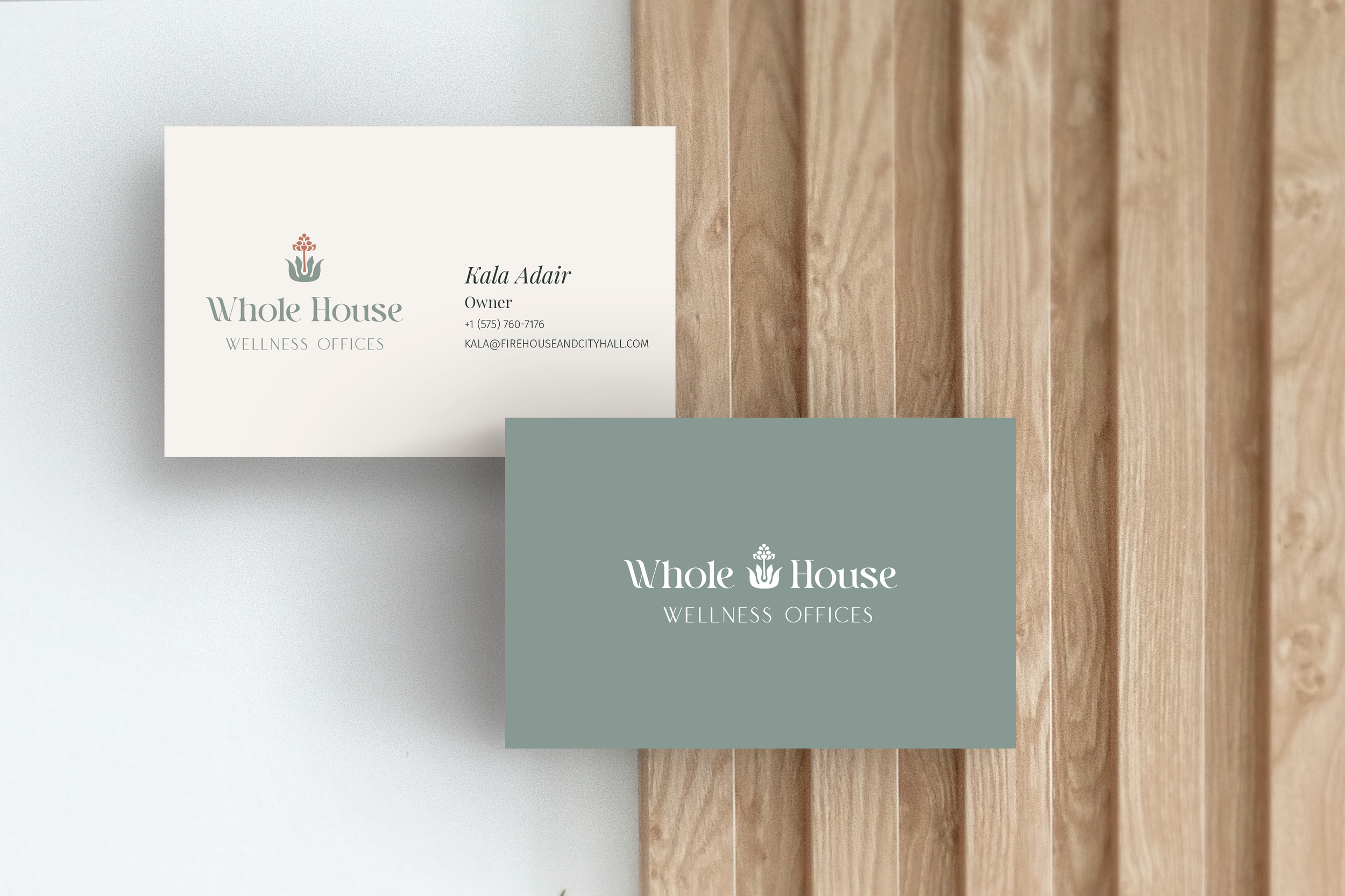
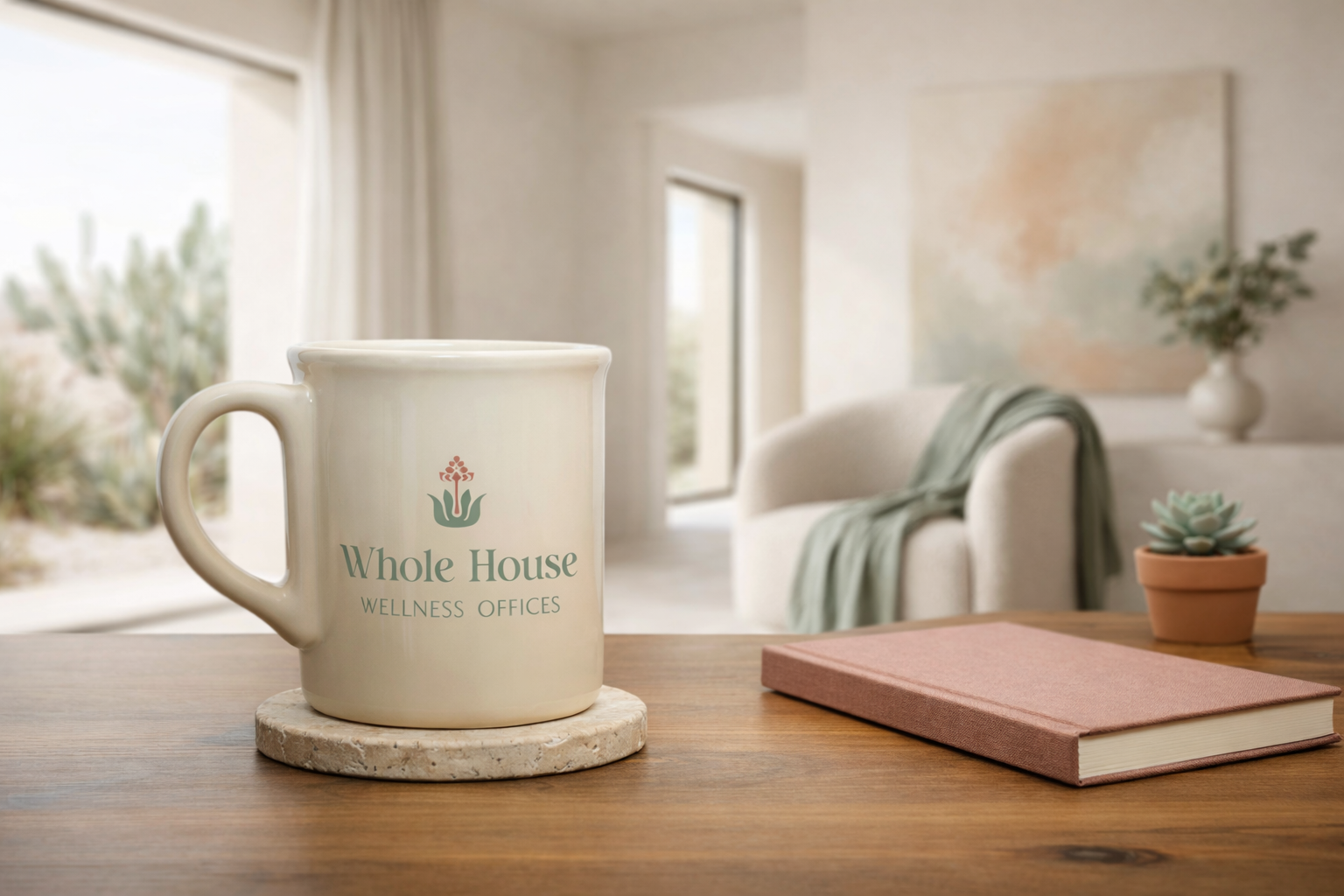
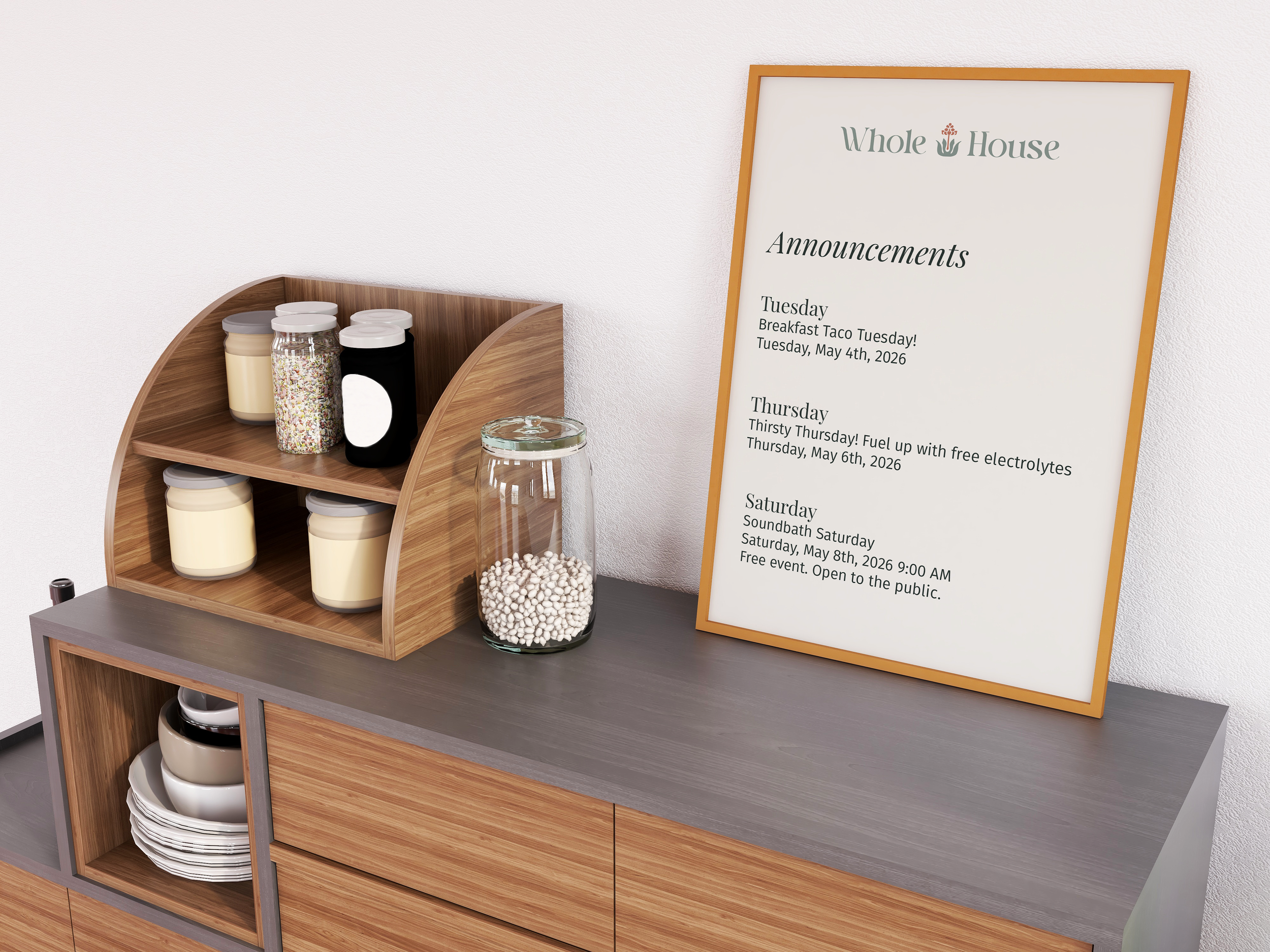
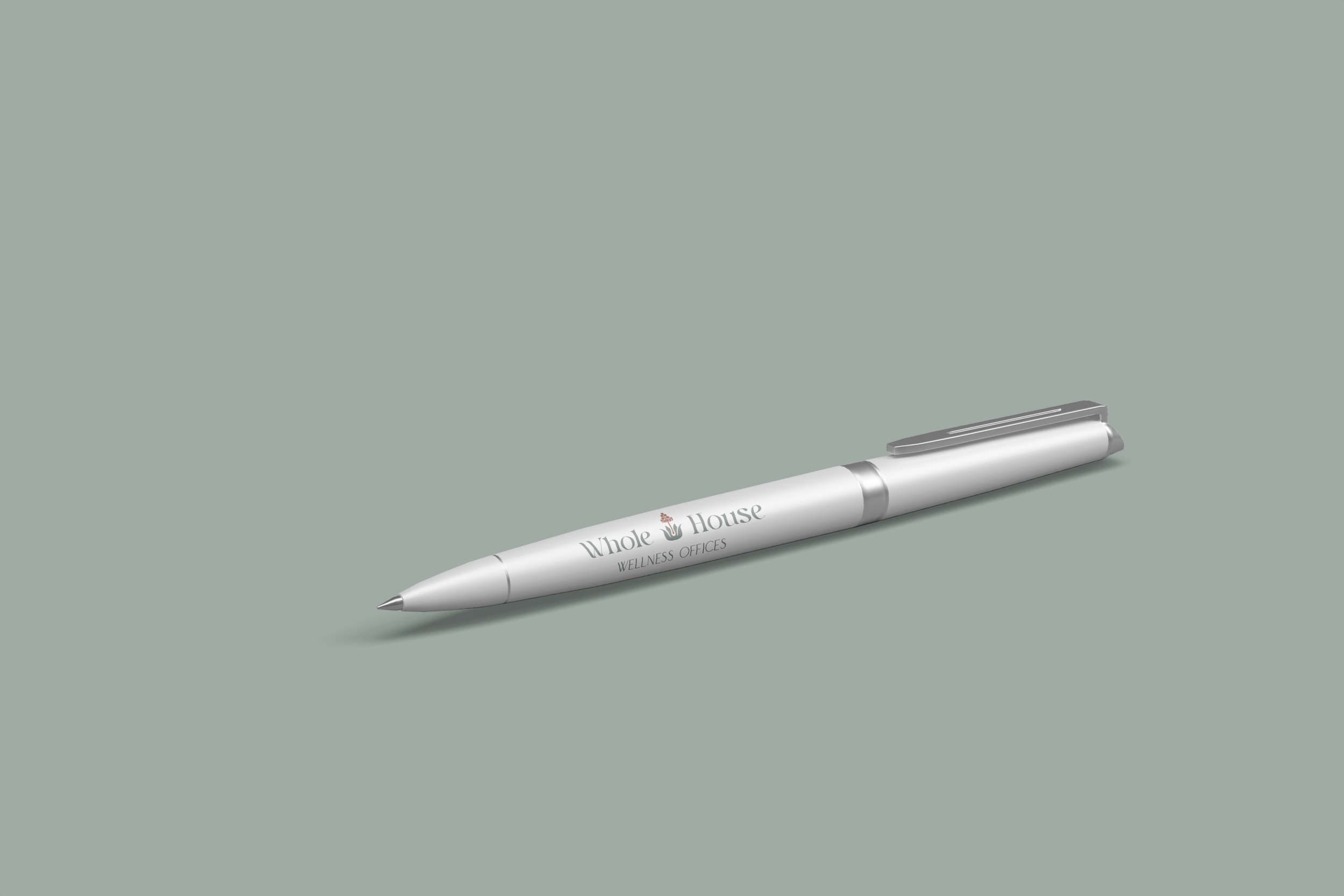
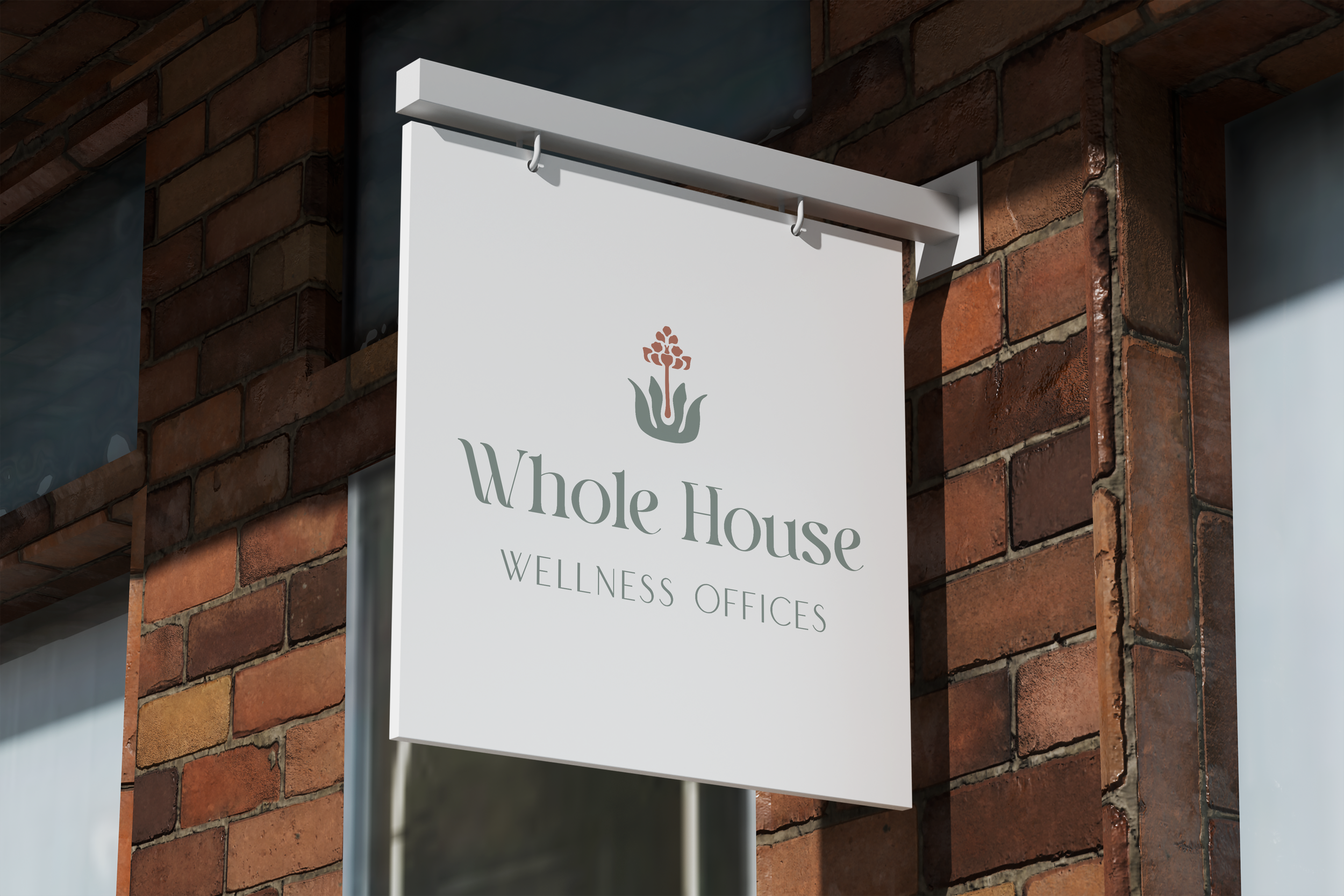
Deliverables: Brand identity extended across signage, printed materials, shared environments, and everyday objects throughout the space.
The result
Whole House now has a brand that supports both the practitioner and the client. It reads as professional without intimidation and calm without ambiguity. Every touchpoint, from the signage at the door to the objects in shared rooms, feels considered, credible, and quietly supportive, so the space starts doing its job before anyone walks through the door. Strong branding isn't about adding more. It's about creating clarity.
Building a space or practice that needs to feel just right? Let's create a brand that does its job before the first hello.